
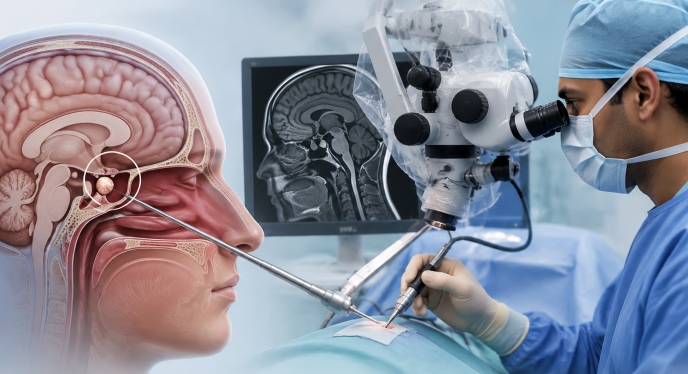
Introduction to Transsphenoidal Surgery
Transsphenoidal surgery is a type of minimally invasive brain surgery. Doctors use it to remove tumors from the pituitary gland. The pituitary gland sits at the base of the brain. Because this surgery uses a small opening through the nose, it often leads to faster recovery. Many people choose this method for pituitary tumor surgery because it is less invasive than traditional brain surgery. According to the World Health Organization, this approach is safe and effective for many patients.
Indications: When and Why Is This Surgery Performed?
Doctors recommend transsphenoidal surgery for several reasons. Most often, it is used to remove pituitary tumors. These tumors can cause headaches, vision problems, or hormone changes. Sometimes, the surgery is needed if medicines do not work. In other cases, a tumor may press on nearby nerves or tissues. Therefore, removing it can help prevent further problems. This surgery is also used for some other growths near the pituitary gland.
Preparation: What to Expect Before Surgery
Before transsphenoidal surgery, your doctor will order tests. These may include blood tests, MRI scans, or vision checks. You may need to stop certain medicines before the procedure. Your doctor will give you clear instructions. For example, you may need to avoid eating or drinking after midnight before surgery. It is important to follow all directions closely. This helps lower the risk of problems during surgery.
The Surgical Procedure: Step-by-Step Explanation
During transsphenoidal surgery, the surgeon works through the nose. First, you will receive anesthesia, so you will not feel pain. Next, the surgeon makes a small cut inside the nostril. Then, they use special tools to reach the pituitary gland. The tumor is carefully removed. After that, the surgeon closes the area. Because the brain is not touched directly, recovery is often quicker. The whole process usually takes a few hours.
Benefits and Advantages of Transsphenoidal Surgery
There are many benefits to this type of minimally invasive brain surgery. Some of the main advantages include:
Because the surgery avoids opening the skull, patients often feel better sooner. Many people return to normal activities within a few weeks.
Risks and Possible Complications
Like any surgery, transsphenoidal surgery has some risks. However, most people do well. Possible complications include:
Your doctor will discuss these risks with you. Early treatment can help manage most problems if they occur.
Recovery Process and Aftercare Tips
After transsphenoidal surgery, you will stay in the hospital for a short time. Doctors will watch your recovery closely. You may need to rest for a few days. Most people can return home within a week. At home, you should:
Because recovery times can vary, always check with your doctor before resuming normal activities. If you notice fever, severe headache, or vision changes, call your doctor right away.
Prevention and Lifestyle Guidance
While you cannot always prevent pituitary tumors, healthy habits can support your recovery. For example, eat a balanced diet and get enough sleep. Avoid smoking and limit alcohol. Regular check-ups help catch problems early. Staying active, as your doctor allows, can also help you heal faster.
Frequently Asked Questions (FAQs) About Transsphenoidal Surgery
Conclusion
Transsphenoidal surgery is a safe and effective way to treat pituitary tumors. Because it is minimally invasive, recovery is often quicker and easier. However, every patient is different. Consult Dr Syed Yasin S for personalized advice about transsphenoidal surgery.